



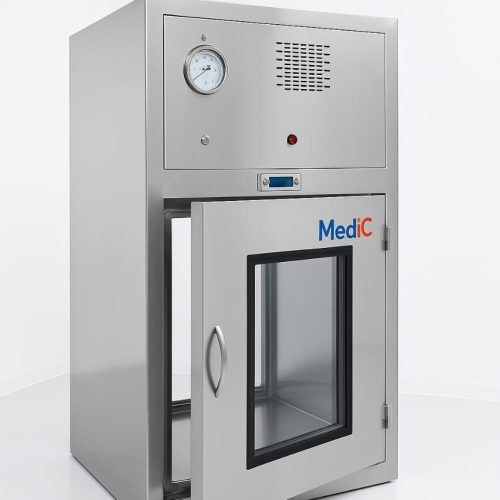
Bio Safety Cabinet
Home » Bio Safety Cabinet
Introduction
Ensure the highest benchmarks of laboratory security with the Bio Safety Cabinet (BSC) from Mediclue Corporation. Often referred to as a Biological Safety Cabinet, our units are precision-engineered to provide a primary containment barrier that safeguards the user, the product, and the surrounding environment from exposure to biohazardous agents. Whether utilized in high-stakes medical research, healthcare diagnostics, or pharmaceutical manufacturing, our BSC systems deliver superior containment performance and uncompromising safety.
We specialize in the manufacturing of Class I, Class II, and Class III Bio Safety Cabinets, with Class II and III being the industry standard for advanced microbiological work. Beyond our standard models, we provide bespoke engineering services to customize cabinet configurations based on your specific procedural workflows and safety requirements.
Mediclue Corporation is a premier manufacturer and global exporter of high-quality biological containment solutions, serving critical needs in:
Pharmaceutical Production
Bio-Technology & Life Sciences
Clinical & Diagnostic Laboratories
Features
-
Triple-Tier Containment Solutions: We offer Class I, Class II, and Class III configurations, meticulously engineered to address various biosafety levels (BSL). Each tier is designed with specialized safeguards to provide comprehensive protection for the user, the product, and the external environment.
-
High-Performance Filtration Matrix: Equipped with medical-grade HEPA filters, our cabinets effectively neutralize microorganisms, particulates, and hazardous aerosols. This advanced system generates a consistent laminar airflow, establishing a certified sterile zone that prevents cross-contamination.
-
Human-Centric Ergonomics: Beyond safety, we prioritize operator comfort for long-duration tasks. Our cabinets feature an intuitive digital interface, ergonomic armrests, and a streamlined chassis design to ensure optimal posture and effortless system management.
-
Integrated Safety Protocols: To guarantee maximum operator security, our BSCs are integrated with fail-safe mechanisms, including airflow velocity sensors, germicidal UV sterilization lamps, and electronic door interlocking systems.
-
Streamlined Serviceability: Built for high-uptime environments, the cabinet architecture allows for rapid filter access and cleaning. Built-in monitoring systems provide real-time diagnostics, ensuring the unit remains at peak performance with minimal service intervals.
-
Global Validation & Compliance: Our Bio Safety Cabinets outperform international air quality and containment benchmarks. We provide a full technical documentation suite (IQ/OQ/PQ) to ensure your facility maintains total alignment with GMP and global regulatory mandates.
-
Multi-Disciplinary Versatility: Engineered for precision, our systems are the preferred choice for a wide array of specialized fields, including virology research, pharmaceutical compounding, clinical microbiology, and sensitive cell culture work.
Working Principle
The functionality of a Bio Safety Cabinet varies significantly based on its classification and specific model. Each is engineered to provide a unique balance of protection for the user, the product, and the laboratory environment.
To assist in your selection, we have outlined the operational mechanisms for the three primary classes:
Class I Bio Safety Cabinets: Designed primarily for operator and environmental protection. Ambient air is drawn into the cabinet, directed away from the technician, and passed through a HEPA filter before being exhausted. This model is ideal for low-to-moderate risk procedures where product protection (sterility) is not the priority, such as tissue homogenization or enclosing centrifuges.
Class II Bio Safety Cabinets: The industry standard for clinical research and microbiology, providing operator, product, and environmental protection. These are divided into four distinct types based on their air recirculation and exhaust ratios:
Type A1: Recirculates 70% of the air and exhausts 30%. It maintains a minimum intake velocity of 75 fpm.
Type A2: Similar to A1 but with a higher intake velocity of 100 fpm, making it the most popular choice for general laboratory safety.
Type B1: Recirculates only 30% of the air while exhausting 70% through a dedicated duct. This is suitable for work involving trace amounts of volatile chemicals.
Type B2 (Total Exhaust): A 100% exhaust system with zero air recirculation. It is essential for procedures involving volatile toxic chemicals or radionuclides where no air can be returned to the workspace.
Class III Bio Safety Cabinets: Often referred to as a “Glove Box,” this system offers the absolute maximum level of containment. It is a hermetically sealed, leak-proof environment where operations are performed through heavy-duty rubber gloves. Material movement is handled via an integrated transfer chamber (pass box). These are critical for high-risk BSL-4 pharmaceutical and virology labs.
Faq's
What is the correct protocol for operating a Bio Safety Cabinet? Prior to beginning any procedure, operators must equip themselves with the appropriate Personal Protective Equipment (PPE), such as lab coats, sterile gloves, and ocular protection. The internal workspace should be meticulously decontaminated before and after each session. During operation, it is vital to keep the viewing sash at the recommended height to maintain the integrity of the protective air curtain.
What is the recommended frequency for system certification and servicing? To ensure the unit provides the necessary containment and user protection, a certified technician should perform full servicing and calibration at least annually. Requirements may vary based on institutional SOPs and local biosafety regulations. Additionally, the internal chamber must be sanitized before and after every operational cycle using validated cleaning agents.
Are BSC units compatible with all categories of biological agents? While our cabinets accommodate a vast spectrum of microorganisms, cell cultures, and tissue samples, the specific Biosafety Level (BSL) of your material dictates the required cabinet class. High-risk or highly infectious pathogens necessitate the superior containment provided by Class II or Class III systems rather than standard Class I units.
Can a Bio Safety Cabinet replace a Fume Hood for chemical handling? It is important to distinguish that BSCs are primarily engineered for biological containment. While some models offer limited protection against trace vapors, they are not a substitute for Chemical Fume Hoods, which are specifically built to exhaust and neutralize hazardous chemical fumes.
What operational precautions should be observed during use? To prevent airflow disruption, operators should utilize strict aseptic techniques and minimize rapid arm movements. Avoid cluttering the work surface with excessive equipment, as this can impede the laminar flow and compromise the sterile zone. Always follow the specific manufacturer guidelines and institutional safety manuals provided with your unit.
Does Mediclue Corporation offer bespoke Bio Safety Cabinet engineering? Yes. We specialize in developing customized BSC solutions tailored to complex architectural constraints or unique research workflows. Please consult with our engineering sales team to discuss your specific technical requirements.
Do you manage international logistics and onsite validation? As a premier global manufacturer and exporter, Mediclue Corporation coordinates secure shipping to any destination worldwide. Our comprehensive service package includes professional installation, technical validation (IQ/OQ/PQ), and Annual Maintenance Contracts (AMC) to ensure your facility remains in total regulatory compliance.
Related Blogs
Cleanroom Equipment: The Backbone of Contamination-Free Manufacturing by MEDICLUE CORPORATION
November 6, 2025
No Comments